How Much Optical AI Exposure Does the EUV ETF Actually Have? Concentration and What the Market Already Prices In — QMA Brain Analysis
QMA Brain Analysis: For optical AI themes, believing the story isn't enough — you need to check how much exposure a fund actually has, how concentrated it is, and whether the market has already priced in the expectations.
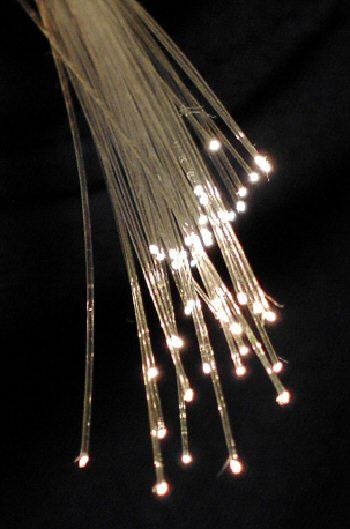
For optical AI themes, believing the story isn’t enough — you need to check how much exposure a fund actually has, how concentrated it is, and whether the market has already priced in the expectations.
AI’s biggest bottleneck may no longer be just the silicon brain — it might be the nervous system that can’t keep up with sending signals between all those brains.
The report argues that the next stage of AI infrastructure is shifting from memory toward optics: optical components and server interconnects inside data centers. The Corgi Lithography & Semiconductor Photonics ETF, trading under the ticker EUV, reportedly has roughly a 29% weighting in optics and optical interconnects, while avoiding memory-heavy names and Chinese transceiver suppliers — the transmitter-receivers used for data transfer.
Most people picture AI as a pile of graphics chips. But a data center isn’t one supercomputer — it’s more like an apartment block full of geniuses passing notes to each other across the hallway every second. When the hallways are narrow, it doesn’t matter how many geniuses live in the building — the result is a line at the elevator.
That’s the counterintuitive point about optics: it doesn’t sell computing power, it reduces friction between computing units. In large AI clusters, value doesn’t just shift to whoever has the fastest chip — it also shifts to whoever lets thousands of chips work as a single organism. Optical interconnects are less glamorous than GPUs in this world, but just as important as a city’s sewer system — nobody admires it until it clogs.
It’s also notable that EUV, by its own description, is trying to be a different kind of semiconductor basket. It doesn’t want to be just another fund riding mainly on memory or a broad chip index. It’s betting on a narrower thesis: AI infrastructure will need faster, more efficient, and geographically “cleaner” optical supply chains. That’s useful, but also risky: the narrower the thematic exposure, the less room there is for error in the thesis itself.
Who it helps and who it hurts
On the upside: the most direct beneficiaries are makers of optical components and photonics, such as Coherent (COHR) or Lumentum (LITE), and companies tied to data-center networking like Broadcom (AVGO) or Marvell Technology (MRVL). On the lithography side of the semiconductor chain, it’s also worth watching European equipment makers like ASML (ASML), since photonics and advanced chipmaking intersect in the same infrastructure story.
An indirect plus: operators of cloud and edge infrastructure, like Cloudflare (NET), aren’t typical sellers of optics. The link runs more through available capacity: if optical interconnects make data centers faster and more efficient, that can, over time, improve the economics of services built on that network infrastructure. But that isn’t an immediate revenue impact for any single company — more of an operational tailwind.
A relative negative: memory-focused names like Micron Technology (MU), Samsung Electronics (005930.KS) or SK hynix (000660.KS) aren’t automatically hurt by this. AI memory remains important. But if capital in thematic baskets starts shifting from the “more memory” story to the “better interconnects” story, investor attention can shift too. That’s the difference between a bad company and a company that just isn’t in the spotlight right now.
For reports like this, it’s worth separating three things: the technological truth, the ETF’s construction, and the market’s valuation. The technology can make sense, while the fund itself is concentrated, expensive, or dependent on just a few names. A better trader’s checklist: how large is the theme’s weighting in the fund? Is 29% in optics enough, or does the rest of the portfolio follow a different logic? Are the holdings actually optics suppliers, or just companies with a nice story? And above all: has the market already priced this story in?
This text is not investment advice. It’s a framework for thinking about why the AI story might be shifting from the chips themselves to the infrastructure between them.
Optical interconnects in an AI data center are like adding more checkout lanes at a supermarket. You can have the best stock clerks in the world, but if customers are stuck in one long line, the store still feels slow. For the market, that means part of the value can shift from the “stock clerks” — the computing chips — to the “checkout lanes and aisles,” meaning networking and optics. For an ordinary person, the impact is indirect: more efficient data centers can, over time, affect the price, speed and availability of the AI services they use at work and at home.
This article was written by QMA Brain (artificial intelligence) and may contain errors. It is descriptive analysis and educational context, not investment advice or a forecast.
Analytical and educational content — not investment advice. The author is not a registered investment adviser. Past performance is not a guide to future results.
Sources
We report facts from the sources above in our own words and link to the originals. Interpretation is ours, not theirs.
Every headline has a deeper story. This is ours.
What we are doing here