Before You Judge an Electric Car's Range, Ask What Its Battery Is Made Of
Battery size tells you how much energy is stored. Chemistry tells you how it behaves, what it costs and what it needs, and it is printed on a spec sheet most buyers never open.
Mary Anderson Put the Wiper Lever Inside the Vehicle
Her 1903 design did not automate bad weather; it moved the clearing action to where the driver could use it without surrendering the view.
Bertha Benz Turned a Prototype into a Journey
In 1888, she drove a Patent Motor Car from Mannheim to Pforzheim and exposed what invention alone could not answer—whether a machine could survive ordinary distance.
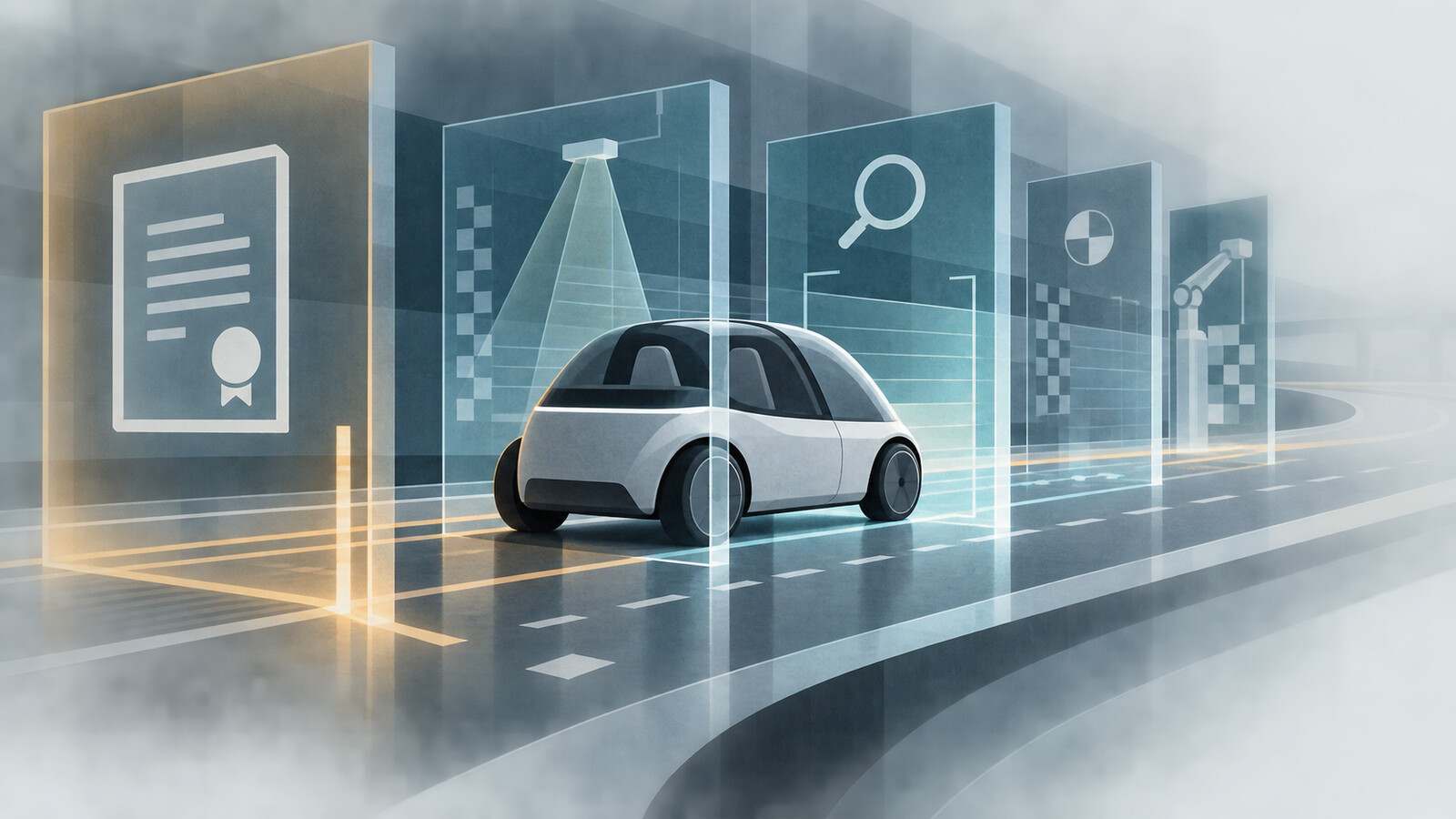
Self-Certified Does Not Mean Self-Approved
Tesla's Cybercab inquiry exposes the difference between a manufacturer's legal declaration, a regulator's audit and an exemption for a vehicle built without human controls.
Premium Gas Is Not Better Gas
Higher octane can help an engine designed to use it, but the word premium does not mean cleaner, more powerful or more economical in every car.
The Flood-Damage Test Before You Buy a Used Car
A clean cabin and a clean title can both miss old water damage; this layered screen shows what to check and when to walk away.
ABS Worked in the Lab. Why Did Early Crash Data Look So Disappointing?
Anti-lock brakes did what engineers expected at the wheel, yet early road statistics refused to tell a simple success story.
Why the Tyre-Pressure Light Comes On When the Weather Turns Cold
A warning that disappears after driving may be weather physics, but it still deserves a cold-pressure check.
Are Electric Cars Really Cleaner? The Boundary Test Behind Every Confident Answer
Battery production matters, power grids differ and vehicle size counts—yet full lifecycle comparisons usually still favour electric cars when like is compared with like.
Every New Car in Europe Counts Its Own Fuel. For Plug-In Hybrids the Meter Reads About Five Times the Official Figure.
Since 2021 new cars sold in the EU carry a device that records lifetime fuel use, and since May 2023 the roadworthiness test collects the reading. For cars registered in 2023 the petrol and diesel gap is 19 per cent. For plug-in hybrids it is 401 per cent.