Two injections a year: the HIV shot has started arriving, and the hard part is the queue
Nine African countries have now given 191,620 doses of lenacapavir — a drug that stops HIV by jamming the virus's protein shell — but supply, not science, is the limit.
In short
What happened. Nine African countries have delivered 191,620 doses of lenacapavir, a twice-yearly injection that prevents HIV infection, through their national programmes.
What it means. The drug is being given at scale; the limit has moved from science to supply. Several countries told the International AIDS Conference that supply, not demand, was the constraint.
Risks and impact. Nearly 66,000 people had newly started, at around 900 sites. It prevents infection; it is not a cure and, on its own, not a treatment. A person must test HIV-negative before every dose, and starting with an undiagnosed infection can produce drug-resistant virus. Where stock ran short, new patients could not begin.
What can be done. Availability is set by national programmes, not individuals. A clinic or the national HIV programme can say whether the injection is offered locally; UNAIDS, the Global Fund and US health agencies publish rollout figures, approved use and warnings.
What to watch. Whether deliveries rise toward the more than one million doses planned for 2026, and the three million people targeted by the end of 2028.
Shown as a summary because of your reading settings.
What happened
At the 26th International AIDS Conference in Rio de Janeiro in July 2026, officials from nine African countries reported a shared total: 191,620. That is how many doses of lenacapavir — a twice-yearly injection that prevents HIV infection — had been delivered through their national programmes. Nearly 66,000 people had newly started on the drug, across around 900 sites.
The country figures vary sharply. Mozambique reported roughly 10,000 initiations across 55 facilities in three provinces. Kenya recorded over 4,000 among key populations. Eswatini had about 1,000 initiations among adolescent girls and young women, at 32 sites. Malawi, which began later, had 303 clients by mid-July. Around 60% of them had never used any HIV prevention medicine before.
The others were Lesotho, Nigeria, South Africa, Uganda and Zimbabwe.
Lenacapavir was approved by the US Food and Drug Administration on 18 June 2025, under the brand name Yeztugo. On 14 April 2026, the Global Fund and the United States government announced an expanded joint commitment, aiming to reach three million people by the end of 2028.
The 191,620 doses are roughly 14% of the more than one million planned for 2026. Several countries told the conference that supply, not demand, was the constraint.
The background
Here is why it works.
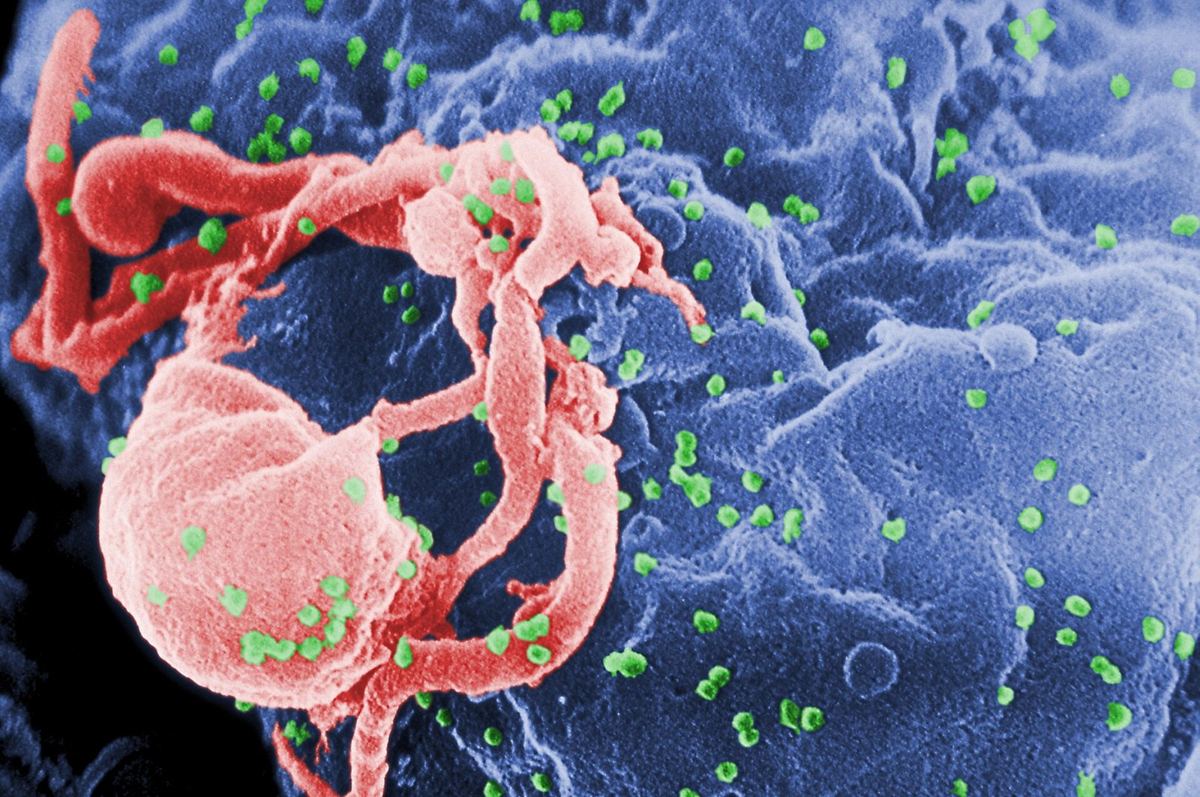
HIV carries its genetic material inside a cone-shaped protein shell called the capsid. The capsid is not merely packaging. It has to hold together long enough to smuggle the virus’s genome into the cell nucleus, then fall apart at precisely the right moment.
Lenacapavir binds into the pockets between the capsid’s protein subunits and jams that timing. Early in infection it blocks the capsid-mediated import of viral DNA into the nucleus. Later it disrupts the Gag and Gag-Pol proteins, cuts capsid production and forces new shells to assemble in malformed shapes. The virus is not so much killed as made structurally incompetent.
The molecule also leaves the body very slowly: a half-life of eight to twelve weeks under the skin. That is the entire reason a twice-yearly schedule is possible.
The trial results were unusual. In PURPOSE 1, among 2,134 participants receiving lenacapavir — cisgender women in sub-Saharan Africa — there were zero HIV infections. In PURPOSE 2, among 2,179 cisgender men and gender-diverse participants, there were two.
Now the limits.
This is prevention — not a cure, and on its own not a treatment. A person must test HIV-negative before the first injection and before every one after. The drug carries a boxed warning: someone who starts it with an undiagnosed infection can develop drug-resistant virus. Residual concentrations can persist for twelve months or longer, which complicates later drug choices. Injection-site nodules occurred in 63.4% of PURPOSE 2 recipients; 26 stopped the drug because of them.
The price is also unresolved. Under an agreement with Dr Reddy’s Laboratories brokered by Unitaid, the Clinton Health Access Initiative and Wits RHI, a generic should reach 120 low- and middle-income countries at about US$40 per person per year, the oral starter course capped at US$17. From 2027. Not now. UNAIDS puts new HIV infections at roughly 1.3 million a year.
Who it touches
The Malawi number is the revealing one. Around 60% of those first 303 clients had never taken HIV prevention medicine before. These are, largely, people who were offered a daily pill and did not take it.
The same pattern appeared in the trials. In PURPOSE 1, adherence to the injection ran above 90%. Adherence to daily oral tablets in the comparison groups was low.
A daily pill is not only a drug. It is a bottle in a shared room. It is a rattle in a bag on a bus. It is a thing that may have to be explained to a partner or a mother-in-law, and a decision taken 365 times a year. An injection every six months is a different object entirely. It is two appointments.
Supply has already cut the other way. Eswatini reserved 10,000 doses for people already on the drug, which meant new patients could not start. Mozambique saw uptake fall when stock ran short. The people turned away are counted nowhere.
The deeper story
There is a moment in most medical stories that attracts little attention, because nothing about it is dramatic: the gap between a thing working and a thing arriving.
The science on lenacapavir is essentially settled. What now stands between the molecule and the person is a set of entirely human artefacts: manufacturing capacity, licensing terms, regulatory queues, cold chains, clinic opening hours, and a price that changes in 2027 but not today. None of these are laws of nature. Every one of them was designed by somebody.
That changes the shape of the question. When the obstacle was biology, the honest answer to a person at risk was “we do not know how”. The obstacle is now a schedule. The answer becomes “we know how, and you are somewhere in a queue”.
Queues are a strange moral object. We build them because they are fairer than a scramble, and they are. But a queue also converts a shortage into a sequence of individual outcomes, and it disperses responsibility so thoroughly that no identifiable person ever decides that a particular person waits. In Eswatini, ten thousand doses were held back for people already started. That was almost certainly correct — interrupting the drug is worse than never beginning it. Someone still did not begin.
The word “breakthrough” implies an ending. Most of the work in public health happens after it, and looks a great deal like freight forwarding. The story we tell about medicine stops at the laboratory door. That is roughly where the difficulty starts.
Something to sit with
- When you last heard the word “breakthrough” in a health story, what did you assume happened next?
- Who decides the order of a queue that nobody admits to running?
- What would change if the years between a discovery and its arrival were reported as closely as the discovery?
Sources
- aidsmap — Nearly 200,000 lenacapavir shots given across Africa (AIDS 2026) — https://www.aidsmap.com/news/jul-2026/nearly-200000-lenacapavir-sho...
- The Global Fund — US and Global Fund expand commitment to long-acting HIV prevention — https://www.theglobalfund.org/en/updates/2026/2026-04-14-us-global-...
- Gilead Sciences — Yeztugo (lenacapavir) FDA approval announcement — https://www.gilead.com/news/news-details/2025/yeztugo-lenacapavir-i...
- NIH ClinicalInfo.HIV.gov — Lenacapavir (HIV prevention), health professional drug record — https://clinicalinfo.hiv.gov/en/drugs/lenacapavir-hiv-prevention/he...
- Clinton Health Access Initiative — Unitaid, CHAI, Wits RHI and Dr Reddy's lenacapavir agreement — https://www.clintonhealthaccess.org/news/unitaid-chai-wits-rhi-dr-r...
- UNAIDS — Statement on expanded lenacapavir rollout, 15 April 2026 — https://www.unaids.org/en/resources/presscentre/pressreleaseandstat...
We report facts from the sources above in our own words and link to the originals. Interpretation is ours, not theirs.
♻︎ Free to republish
Copy this HTML into your CMS. Credit line and licence are included. Republish our work — free
Every headline has a deeper story. This is ours.
What we are doing here