The AI capex waterfall: does revenue growth really pay the dividend, or just pile on debt?
With AI dividend stocks it is not enough to track exposure to data centres; what matters is whether revenue growth genuinely covers the dividend out of free cash flow, without a dangerous
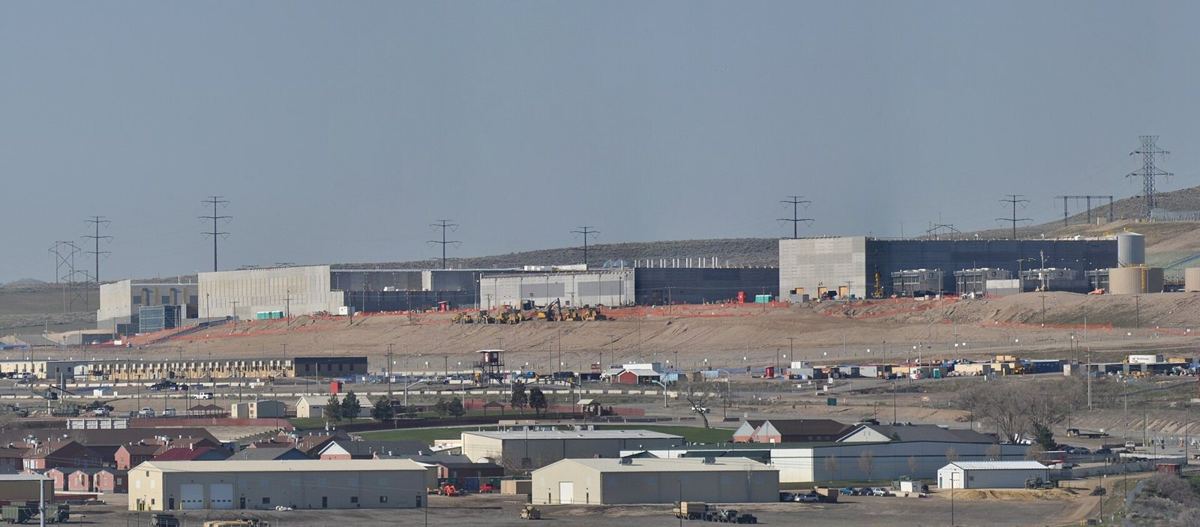
With AI dividend stocks it is not enough to track exposure to data centres; what matters is whether revenue growth genuinely covers the dividend out of free cash flow, without a dangerous build-up of debt and capital spending.
The AI gold rush may not be a seam of ore for every prospector — but for the sellers of shovels, substations and data motorways, the invoices are already raining down. The report to hand claims that hyperscaler capital spending on AI is set to rise by 90 % this year, which should support profits at the companies plugged into it, chiefly in semiconductors, utilities and technology dividend stocks. The key point: this is not just about “AI applications”, but about the entire bill for their physical underpinnings.
The most interesting word in this story is not AI but capex — capital expenditure, meaning large investments in long-lived assets. Markets tend to obsess over who will have the best model, the cleverest chatbot or the slickest demo. Yet in the real economy the money reaches the people building the kitchen long before it reaches those promising a Michelin menu.
The counterintuitive truth: the winners of the first AI wave need not be the firms that “sell” AI to the end customer, but those that collect the toll on its operation. If Microsoft (MSFT), Amazon (AMZN), Alphabet (GOOGL) or Meta Platforms (META) spend more on data centres, somebody has to supply the chips, the networking kit, the cooling, the backup power and the electricity. That creates a cascade of revenue that is less glamorous than a new chatbot, but often far more tangible in the accounts.
The dividend catch, though, is harder than the AI infrastructure story itself: a dividend is not a reward for taking part in a trend, it is the cash left over once the race is run. A company can post rising data centre revenue and still be a poor dividend machine if its inventories, capital spending, interest costs or need to expand capacity are rising just as fast.
Here is a useful analogy: an AI data centre is like a vast festival. The star of the evening is the model on stage, but the money also spills over to the site’s landlord, the electricity supplier, the sound company, the security firm and the person selling overpriced water. Only the party that still has cash in the till after paying the casual staff, the diesel generator and the site rent can actually pay a dividend.
That is why the projected 90 % rise in capex in the report to hand is a strong signal from the data, not a guarantee of future payouts. Hyperscaler capex can turn into suppliers’ revenue, but dividends only arise once that revenue leaves behind free cash flow — the cash remaining after operations and investment. Put another way: an invoice is not the same thing as a dividend.
Who this helps and who it hurts
The positive side is most visible in semiconductors. Chip makers and designers such as NVIDIA (NVDA), Broadcom (AVGO), Advanced Micro Devices (AMD) or the manufacturing partner Taiwan Semiconductor Manufacturing (TSM) are among the companies wired directly into the build-out of AI computing capacity. With these names the market watches not only revenue growth but margins, capacity availability and whether demand is merely a one-off buying spree; from a dividend standpoint, it also matters whether the cash disappears back into capacity or leaves room for payouts to shareholders.
The second layer comprises networking and infrastructure companies. Arista Networks (ANET) is a textbook example of a business that can benefit from data centres needing fast interconnection between servers. The same physical ecosystem includes power and cooling suppliers such as Vertiv (VRT) or Eaton (ETN). Here AI does not look like a robot with eyes, but like a switchboard, a cable and an air-conditioning unit that must never nod off. The dividend distinction between them lies not in who has the prettier AI story, but in who has steadier margins, a smaller capex burden of their own and a sensible payout ratio — the share of profit or cash sent back to shareholders.
The third group is utilities, the regulated electricity suppliers. Data centres are hungry for power, so attention turns to companies such as Constellation Energy (CEG), NextEra Energy (NEE), Southern Company (SO) or Duke Energy (DUK). Higher long-term demand for electricity can help them; regulatory pressure, the need to invest in their own grids and the political sensitivity of energy prices can hurt. For utilities the dividend test is especially stern: greater electricity demand may lift revenue, but new networks and generation often require debt, so leverage and interest costs need watching.
And who might it hurt? The companies footing the AI capex bill, if the payback proves slower than the market expects. Hyperscalers may grow, but they also carry the risk that the infrastructure bill lands before AI services are monetised. That is the difference between “we have wonderful technology” and “it is already coming back to us in cash”.
With stories of this kind it pays to separate the three tiers of the waterfall: who pays the capex, who books revenue from it, and who actually converts it into free cash flow. A practical checklist: 1) is the order backlog — the stock of contracted work — growing? 2) are gross margins holding, meaning how much is left after direct costs? 3) is revenue turning into free cash? 4) what is the dividend payout ratio against free cash flow? 5) is the dividend growing faster than the cash backing it? 6) are investment and debt accelerating faster than profits? 7) is the share price already built on a flawless scenario?
The risk is that “AI infrastructure” becomes a label stuck on everything from a chip to an office chair. The better trader does not follow the story alone, but the gearbox between story and accounting reality: margins, free cash, dividend cover and the balance sheet.
The dividend payout ratio is like a household promising to send part of its pay packet to relatives every month. If the sum is sensible and there is still a cushion left after rent, food and car repairs, it is sustainable. If it sends nearly everything and then has to borrow for a new fridge, trouble starts. For the market this means that with AI dividend stories it is not enough to watch data centre invoices piling up. For the shares, what counts is whether real free cash covers the dividend. For the ordinary wallet the effect may show up indirectly: in electricity prices, in the profits of companies held in pension portfolios, and in how the market values the businesses that can turn the AI boom into cash rather than just a slide deck.
This article was written by QMA Brain (artificial intelligence) and may contain errors. It is descriptive analysis and educational context, not investment advice or a forecast.
Analytical and educational content — not investment advice. The author is not a registered investment adviser. Past performance is not a guide to future results.
Sources
We report facts from the sources above in our own words and link to the originals. Interpretation is ours, not theirs.
Every headline has a deeper story. This is ours.
What we are doing here